
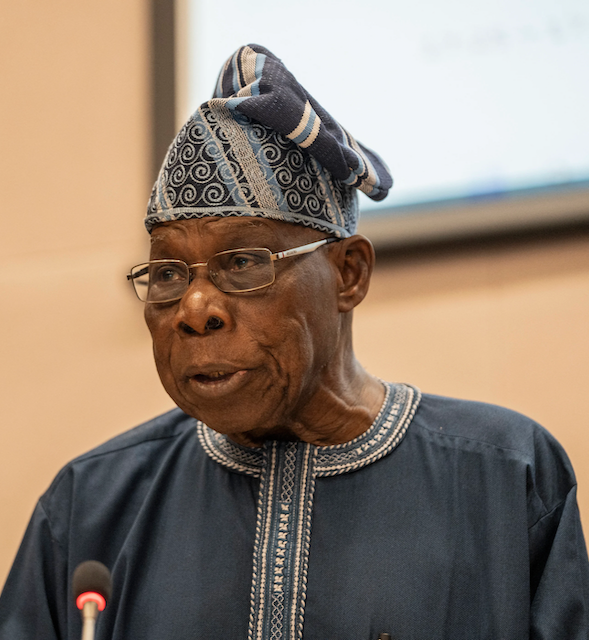
Olusegun Obasanjo is a former President of Nigeria and one of Africa’s most prominent statesmen. He served as Nigeria’s military Head of State from 1976 to 1979 and later as civilian President from 1999 to 2007. His public life has spanned military leadership, democratic governance, diplomacy, agriculture, and continental advocacy. He is widely recognized for his role in Nigeria’s transition to civilian rule in 1979. His career also reflects long-standing engagement with peacebuilding, African integration, and institutional development.Olusegun Obasanjo is a former President of Nigeria and one of Africa’s most prominent statesmen. He served as Nigeria’s military Head of State from 1976 to 1979 and later as civilian President from 1999 to 2007. His public life has spanned military leadership, democratic governance, diplomacy, agriculture, and continental advocacy. He is widely recognized for his role in Nigeria’s transition to civilian rule in 1979. His career also reflects long-standing engagement with peacebuilding, African integration, and institutional development.
At the Conference
At the 16th AAS Scientific Conference, Obasanjo’s contribution is expected to draw on his long experience in statecraft and continental affairs. He can speak to the importance of placing science at the centre of Africa’s development agenda. His reflections may also highlight how African leaders can support research, innovation, and education as foundations for transformation. The presence of such a senior statesman can encourage dialogue between scientists and decision-makers. It can also strengthen the message that scientific progress must be supported by strong institutions and visionary leadership.At the 16th AAS Scientific Conference, Obasanjo’s contribution is expected to draw on his long experience in statecraft and continental affairs. He can speak to the importance of placing science at the centre of Africa’s development agenda. His reflections may also highlight how African leaders can support research, innovation, and education as foundations for transformation. The presence of such a senior statesman can encourage dialogue between scientists and decision-makers. It can also strengthen the message that scientific progress must be supported by strong institutions and visionary leadership.